
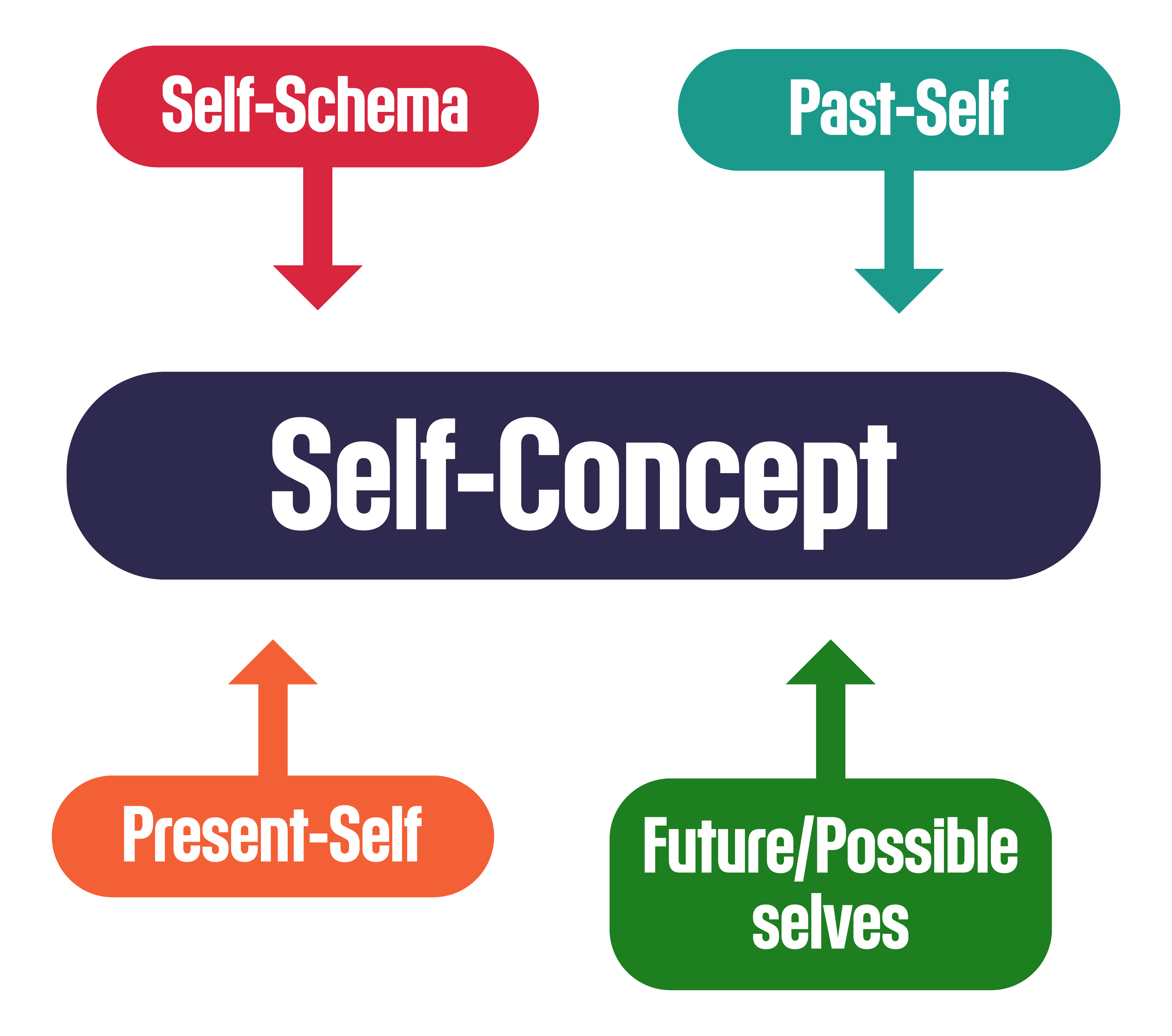
The notion of self-concept can be hard to master, especially because we look at the model from different dimensions. In this post I want to introduce several ideas before diving into the actual discussion of self-concept. These ideas will give us a good foundation of discussing the idea of self-concept from a common language.
Self-Schema
A self-schema refers to a cognitive framework (a mental structure) that represents organized knowledge and beliefs about oneself. It is a system of interconnected thoughts, beliefs and memories that individuals use to process and interpret self-relevant information. Boy that’s a mouthful! A schema really represents the core things that help us think of ourselves as “me”.
Self-schemas serve as a cognitive filter through which people perceive, process, and remember information related to themselves. They influence how individuals perceive themselves, interpret new experiences, and recall past events. Self-schemas are developed and shaped by personal experiences, social interactions, cultural influences, and self-reflection. Think of this as something that we’re not explicitly aware of, but it is important to understand that our brains use these structures to organize the information. Or at least this is how we can organize the knowledge we have about ourselves in a way that makes a little more sense. Maybe if we list the things that make up a self-schema it will help us understand it a little better.
- Organized Self-Knowledge: Self-schemas represent organized and structured information about oneself. They include beliefs, traits, attributes, values, and other aspects that individuals consider essential to their identity.
- Cognitive Filters: Self-schemas act as cognitive filters, influencing how individuals interpret and remember information that is consistent or inconsistent with their self-schema. People tend to pay more attention to information that aligns with their self-schema and may distort or forget information that contradicts it.
- Influence on Perceptions and Behaviors: Self-schemas shape individuals’ perceptions of themselves and guide their behavior. They influence how people perceive themselves, evaluate their abilities, and make choices in various domains of life.
- Stability and Resistance to Change: Self-schemas tend to be relatively stable and resistant to change. Once formed, they can persist over time and influence individuals’ self-perception and behavior, even in the face of contradictory information.
- Domain-Specificity: Self-schemas can be domain-specific, meaning that individuals may have different self-schemas for various aspects of their lives. For example, one may have separate self-schemas for their roles as a parent, employee, or friend.
- Emotional Impact: Consistency or inconsistency between experiences and self-schemas can influence emotional responses. When experiences align with self-schemas, it can enhance self-esteem and well-being. Conversely, discrepancies can lead to feelings of confusion, dissonance, or a need to revise the self-schema.
In other words, self-schemas is what we use to compare what happens around us every day, and determine if it makes sense to us or not, and whether change is needed or not. For example, if I listen to a podcast about male hormones, my self-schema will help me take the information and decide what is readily accepted, what I have to think about for a while, and what might not even apply to me. Say the podcast is talking about teen male hormones, I will use different filters in that case to interpret the information, since I’m older, it doesn’t really apply to me, but as a father, it helps me understand my teens and what they’re going through. In this case I may even think about my past self, and remember if the information is consistent with what I felt; if it is, then I’m more likely to take that information and incorporate it into my present and future self.
Components of Self-concept
The notion of self-concept refers to an individual’s overall perception and understanding of themselves. It encompasses the beliefs, thoughts, feelings, and evaluations that people have about their own characteristics, abilities, values, and identities. In other words, self-concept is the mental representation that individuals have of themselves.
Self-concept is formed through a complex interplay of various factors, including personal experiences, social interactions, cultural influences, and self-reflection. It evolves and develops over time as individuals gather information about themselves and interpret it within the context of their environment. Let’s look at what self-concept might include:
Self-concept plays a crucial role in shaping an individual’s thoughts, behaviors, and interactions with others. It influences how people perceive and interpret themselves, how they relate to others, and how they make choices and decisions in various aspects of life.
It’s important to note that self-concept can be influenced by external factors, such as societal norms, cultural expectations, and feedback from others. However, it is also subject to internal interpretation and personal reflection.
Developing a healthy and positive self-concept is essential for psychological well-being and personal growth. It involves self-acceptance, self-awareness, and embracing one’s strengths and imperfections.